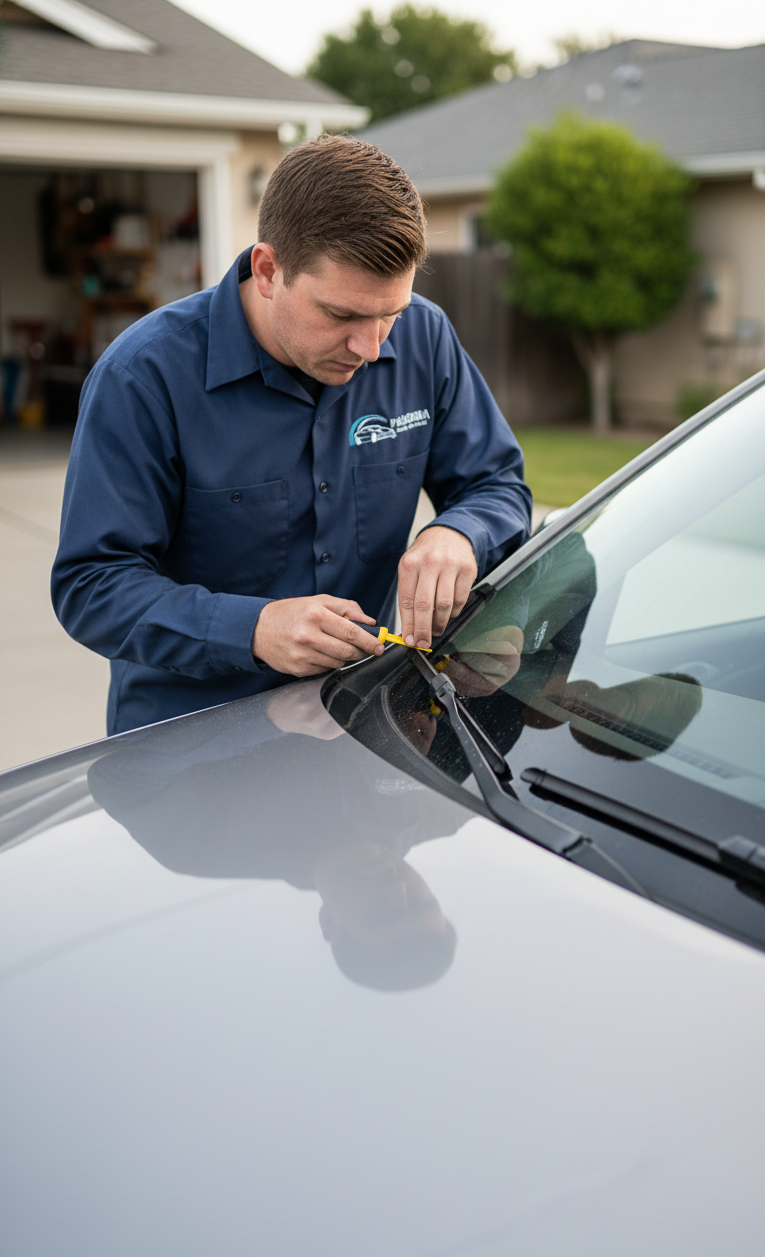
Stop windshield water intrusion with a repair that matches the real failure point.
Windshield leak repair stops water intrusion at the windshield perimeter by diagnosing the leak path and correcting the failed sealing point. Depending on the failure pattern, the service may involve a targeted perimeter reseal or a full perimeter re-bond. The goal is to stop cabin water entry and prevent recurring interior moisture.
Pasadena Mobile Car Glass provides windshield leak repair for vehicle owners dealing with water intrusion at the windshield perimeter, including leaks that started after a previous windshield installation.
A windshield leak repair addresses failure points at or around the windshield bonding and sealing system. This service targets water intrusion into the cabin and related symptoms like damp carpet, drip paths at interior pillars, and wind noise caused by perimeter gaps.
A discontinuity in the adhesive bead can allow water to enter and track into the cabin.
Seal gaps during rain or car washes let water bypass the windshield perimeter and enter the cabin.
Molding that does not seat correctly can channel water behind the glass edge and into the cabin perimeter.
Corrosion risk where the urethane bond meets the body flange can reduce bond quality and contribute to repeat leaks.
A windshield leak rarely stays small. Water can track behind trim and show up far from the entry point, so the pattern of where and when you see moisture matters.
Wet carpet or padding in the front footwell, damp floor mats that return even after drying, musty odor after rain or overnight humidity, and frequent interior window fogging from trapped moisture.
Seeing these signs? Book an inspection. Leak source confirmation comes first. Then we recommend the correct service scope based on the confirmed entry path.
Book an InspectionWindshield leaks usually come from a specific failure point at the perimeter. Common causes include urethane bond gaps, installation defects, molding problems, or pinch weld contamination.
A discontinuity in the adhesive bead can allow water to enter and track into the cabin.
Insufficient surface preparation, inconsistent urethane bead application, or alignment problems can all create leak paths that emerge after installation.
Windshield molding that does not seat correctly can channel water behind the glass edge and into the perimeter bond zone.
Rust, old adhesive residue, or contamination on the pinch weld reduces bond quality and can contribute to repeat leaks.
We offer service options based on the confirmed leak path and perimeter condition. After inspection, we recommend the right fix for your vehicle's bond pattern, trim fit, and water intrusion symptoms.
Every windshield leak repair starts with leak source confirmation. Water can travel along interior trim and show up far from the entry point. We verify where water enters, then recommend the service that matches the failure area.
Windshield rebonding corrects broader perimeter bond failure by restoring a continuous bonding path between the glass and the body. This option is used when leak symptoms suggest multiple entry points, recurring leaks, or a perimeter bond line that needs full correction.
Windshield reseal service targets a localized leak path at the windshield perimeter when inspection confirms a contained failure area. This option is used when the windshield bond is otherwise stable and the water intrusion pattern points to a specific edge or corner.
Windshield wind noise repair addresses airflow entering through perimeter gaps or fit issues that can create whistling, buffeting, or noticeable wind sound at speed. If wind noise is tied to the windshield perimeter, we correct the sealing or bonding failure point as part of the same leak-focused inspection process.
Some leak conditions require windshield removal to correct the bond line, address bonding surface issues, or correct prior installation defects that cannot be fixed from the outside. This option is recommended only after inspection confirms that removal is the correct repair path.
If your vehicle started leaking after a windshield replacement, the cause is often tied to bond continuity, surface preparation, alignment, or molding fit. We diagnose the leak path and correct the failure point using the appropriate service scope for the installation condition.
Get the right fix for the failure point. Pricing depends on the confirmed leak path and service scope.
Request a QuoteWe follow a simple, proven process to find the entry point, fix the failure area, and confirm the leak is resolved.
We collect your vehicle year, make, model, when the leak happens (rain, car wash, both), and where water shows up (dash edge, A-pillars, headliner, carpet). If the leak started after a windshield replacement, we note that too.
We inspect the windshield perimeter, molding, and trim fit. Then we run a controlled leak test to locate the true entry path. Water can travel behind interior panels, so we confirm the source before selecting the repair scope.
We identify the failure point and classify it into one of these categories: a localized perimeter gap that fits a reseal, a broad bond failure that fits rebonding, or surface condition and prior install defects that may require removal and reinstall.
You get a clear recommendation based on the confirmed failure pattern: Windshield Reseal for a contained leak path, Windshield Rebonding for widespread or repeat leaks, or removal and reinstall when the bond line cannot be corrected from the outside.
We prep the repair area so the bond line is continuous and sealed. This typically includes perimeter cleaning, correction of the leak path, and addressing bonding surface issues where applicable.
Windshield Reseal: We seal the confirmed entry path at the perimeter and restore sealing integrity where the gap exists. Windshield Rebonding: We restore the full perimeter bonding path so the glass-to-body bond is continuous again.
If you report wind noise, we check the same perimeter zones for airflow gaps tied to the leak path. When wind noise is caused by perimeter gaps, correcting the sealing or bonding failure point often resolves it.
After the repair, we re-check the perimeter and repeat verification so the confirmed entry path is corrected.
We provide safe drive-away timing guidance based on the repair type and explain any warranty coverage available for your service.
Windshield leak repair is only as good as the bond and sealing integrity at the perimeter. Our process prioritizes the right materials, fit checks, surface awareness, and final verification.
We use materials suited for automotive glass bond and perimeter sealing applications to support long-term repair integrity.
After repair, we verify molding and trim seating so the perimeter fit supports the corrected bond or seal line.
We assess the windshield opening and pinch weld condition before repair work begins to identify factors that could affect bond quality.
We re-check the repaired perimeter after service to confirm the entry path is corrected.
Warranty options are available. Coverage depends on repair type and vehicle conditions. Ask for details when you request a quote.
Windshield leak repair pricing varies because leak causes vary. We quote based on the real leak path, not guesses. The scope is driven by the confirmed entry point, prior installation quality, repair path selected, and whether removal and reinstall is required.
The diagnosed location of the water entry determines the correct repair scope, which drives the base cost of the service.
Leaks caused by prior installation defects may require additional work to correct the surface condition before resealing or rebonding.
A localized reseal, full rebond, and a removal and reinstall all carry different labor and material scopes, which affect total service cost.
When the bond line or bonding surface condition cannot be corrected from the outside, removal is required and will be reflected in the quoted price.
If the leak is localized, a windshield reseal may be enough. Repeat leaks, multi-point drip paths, or broader bond issues often call for windshield rebonding after inspection.
Post-install leaks often come from bond continuity, surface prep, alignment, or molding fit. We confirm the leak source and correct the failure point with the right service scope.
Yes. We confirm the entry path first so the repair matches the actual failure area.
Sometimes. If wind noise comes from a perimeter gap or bond issue, correcting that failure point can reduce it.
Warranty options are available. Coverage depends on repair type and vehicle conditions, so ask during your quote.
Send your year, make, model, when it leaks, and where water shows up. We confirm the leak source before final service scope.
Only when inspection shows the bond line or surface condition cannot be corrected with a reseal or standard re-bond approach.
Ready to stop the leak? Schedule windshield leak repair now. We find the source first, then fix it. Fast quote intake. Clear recommendation after we confirm the leak.