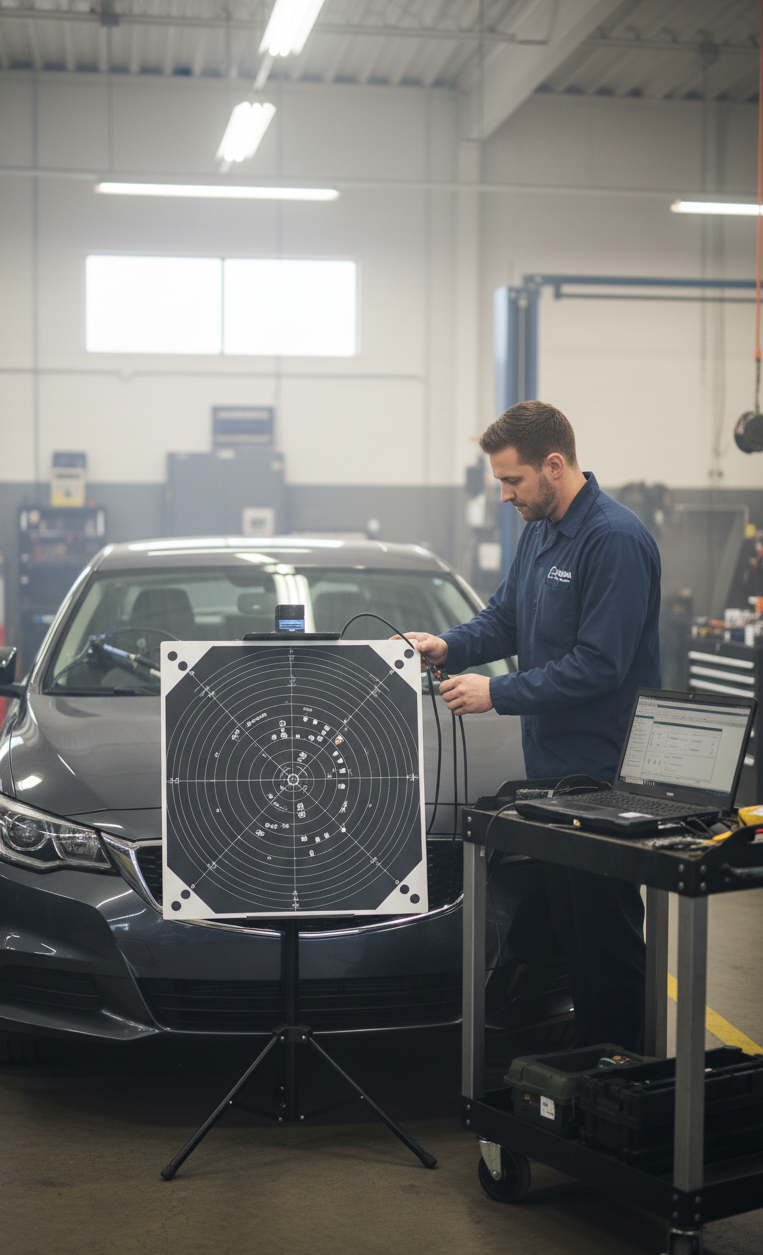
We provide convenient mobile ADAS calibration with verified results for all vehicle types.
ADAS calibration is the process of realigning and verifying windshield-mounted cameras and sensors so Advanced Driver Assistance Systems (ADAS) operate to manufacturer specifications. ADAS warning messages, disabled driver assist features, or camera related fault codes often indicate the system needs ADAS calibration.
Pasadena Mobile Car Glass provides ADAS calibration aligned to OEM procedures and vehicle-specific requirements. We perform both static calibration and dynamic calibration based on the vehicle system, sensor type, and manufacturer guidelines. Our service includes camera targeting, system reset, and post-calibration verification to confirm proper ADAS function and safety system accuracy.
Windshield camera based ADAS systems can lose calibration when the camera position changes or the vehicle detects faults that affect camera aim and interpretation. If the system cannot confirm accurate camera alignment, features tied to the windshield mounted camera may disable or behave inconsistently.
Common signs include ADAS warning lights or messages appearing on the dashboard after windshield replacement or camera disturbance.
Lane support behaving off center or triggering incorrectly often correlates with calibration related fault codes identified during diagnostic scanning.
Forward collision alerts triggering at the wrong time indicate the camera system cannot confirm accurate camera alignment and may need recalibration.
Automatic emergency braking showing unavailable is a common symptom that often correlates with calibration related fault codes identified during diagnostic scanning.
Adaptive cruise control canceling unexpectedly suggests the windshield camera system has lost calibration and needs verification and correction.
Calibration related diagnostic trouble codes identified during diagnostic scanning often indicate the system needs ADAS calibration to return to verified operating status.
Pasadena Mobile Car Glass provides ADAS calibration aligned to OEM procedures and vehicle-specific requirements. Every appointment includes diagnostic pre scan and post scan verification to confirm calibration status and document system results.
We come to you for ADAS calibration appointments.
Calibration method selected based on your vehicle system, sensor type, and OEM requirements.
Pre scan identifies fault codes before work begins; post scan confirms calibration status after completion.
You receive verification focused outputs including calibration confirmation status and diagnostic trouble code documentation.
We calibrate windshield mounted camera systems using the calibration method required by your vehicle so camera based ADAS features can return to verified operating status.
Windshield camera calibration restores the correct aiming and interpretation of the forward facing camera mounted near the windshield. This service is commonly required after windshield replacement, camera removal, camera bracket disturbance, collision repair, or when driver assist warnings appear.
Static calibration is completed in a controlled setup where the vehicle is calibrated to reference targets and measurements specified by the manufacturer. Static calibration is used when the vehicle requires target based alignment to reset windshield camera positioning.
Dynamic calibration is completed using a manufacturer required drive cycle so the vehicle can recalibrate windshield camera interpretation during real driving conditions. Some vehicles require dynamic calibration alone, and some require dynamic calibration after a static calibration is completed.
Every ADAS calibration appointment is completed with verification focused outputs so you can document the work and confirm windshield camera system status.
Diagnostic pre scan to identify camera and ADAS related fault codes before calibration work begins.
Calibration completion confirmation based on the vehicle's manufacturer procedure result.
Diagnostic post scan verification to confirm calibration status and check for remaining fault codes.
DTC documentation showing cleared codes or any codes that remain and require additional repair.
Service record summary describing the calibration type performed: windshield camera calibration, static calibration, dynamic calibration, or combination.
Some conditions prevent windshield camera based ADAS systems from meeting manufacturer calibration thresholds. When these are present, calibration may fail or remain incomplete until the underlying issue is corrected.
Active ADAS or camera fault codes that indicate a sensor, module, or communication issue can prevent calibration from completing successfully.
Collision damage or misalignment affecting camera mounting points or vehicle geometry can block calibration thresholds.
Camera bracket, mounting hardware, or windshield camera seating issues that prevent proper alignment will block successful calibration.
Suspension or ride height changes that alter camera angles and calibration baselines can prevent calibration from meeting manufacturer thresholds.
Wheel and tire size changes that can impact system assumptions used during calibration may cause failure to meet thresholds.
Unresolved alignment or steering angle sensor issues that block calibration completion on many platforms must be corrected before calibration can succeed.
Aftermarket modifications affecting windshield camera position or calibration acceptance can prevent the system from meeting manufacturer calibration thresholds.
Road or environmental limitations for dynamic calibration when manufacturer conditions cannot be met during the required drive cycle can prevent successful completion.
ADAS calibration aligns windshield mounted camera interpretation to manufacturer specifications so supported driver assist functions operate correctly. This service is often required after windshield replacement, windshield camera disturbance, collision repairs, or when the vehicle stores calibration related diagnostic trouble codes.
Examples of supported driver assist features:
ADAS calibration is a verified service that aligns your windshield mounted driver assist camera to manufacturer specifications. It confirms the system can correctly interpret the road and vehicle position so camera based features like lane support, forward collision alerts, automatic emergency braking, and adaptive cruise control operate normally.
Windshield camera calibration is commonly needed after windshield replacement, windshield camera removal or disturbance, collision repair, or when ADAS warning messages appear. If the windshield camera position changes, calibration may be required for the system to confirm correct aiming and operation.
Static calibration is completed in a controlled setup using manufacturer specified targets and measurements for the windshield camera system. Dynamic calibration is completed using a manufacturer required drive cycle so the windshield camera system can confirm interpretation under real driving conditions.
Some windshield camera based systems require a combination based on the manufacturer procedure and the vehicle configuration. Pasadena Mobile Car Glass confirms the required method based on your vehicle and verification requirements before final completion.
Yes. ADAS calibration service includes diagnostic pre scan and post scan verification to confirm windshield camera system status, calibration completion, and any related diagnostic trouble codes.
You receive verification focused outputs such as pre scan results, post scan results, calibration confirmation status, and diagnostic trouble code documentation. You can request a service record summary that identifies the calibration type performed.
Calibration can fail when conditions prevent the windshield camera system from meeting manufacturer thresholds, including active fault codes, camera mounting issues, collision related misalignment, unresolved alignment concerns, or vehicle modifications that change camera angles.
Pasadena Mobile Car Glass provides ADAS calibration for vehicles that rely on a forward facing windshield camera and related driver assist systems. If you have warnings, disabled camera based features, or calibration related fault codes, schedule service so the system can be verified and returned to correct operating status.